

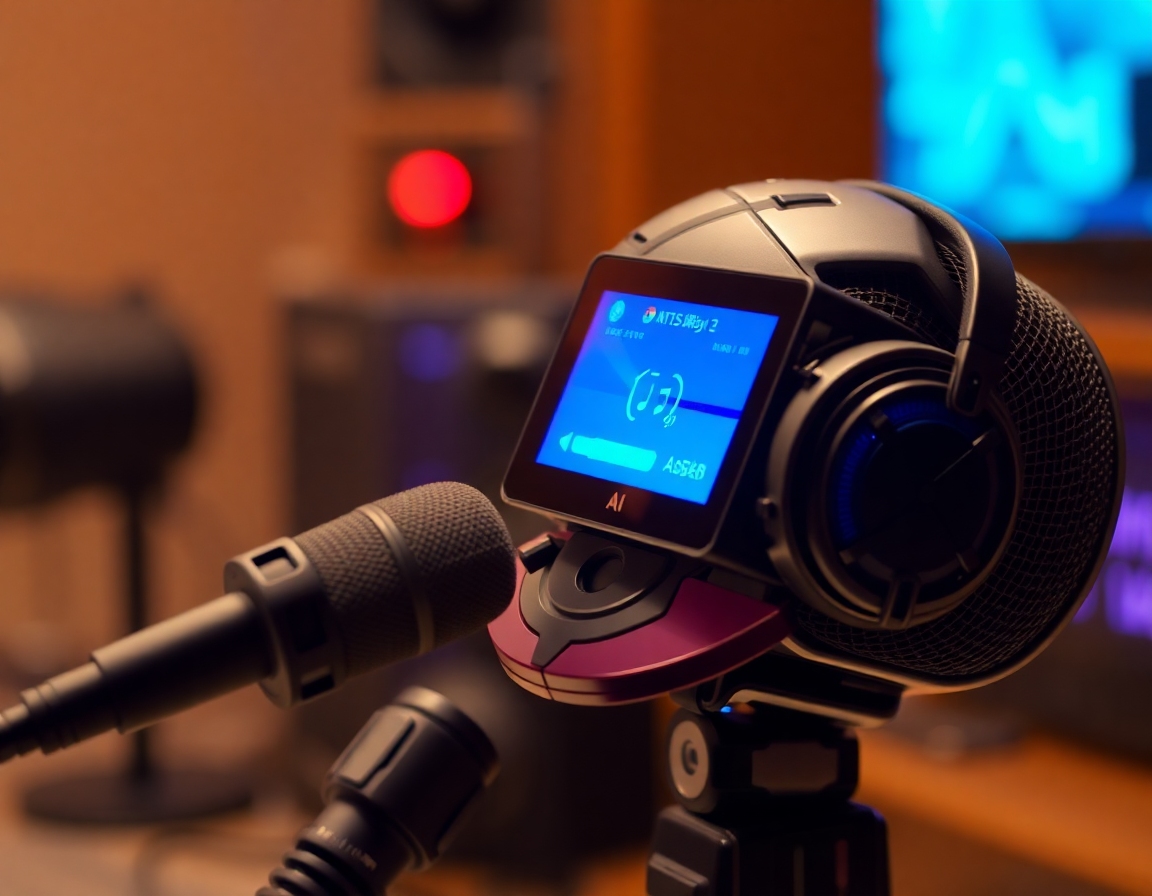
“AI audio tool” is now almost too broad to be useful. A product that reads a PDF aloud is not competing for the same job as a voice-cloning studio, a speech-to-speech performance tool or an open-source text-to-audio research model.
That was the problem with the original version of this article. It treated seven very different products as though they were variations of the same thing.
This 2026 update separates them by the job they actually perform. Robius did not conduct a head-to-head audio-quality test for this update, so we are not ranking which voice “sounds best.” We checked the current product documentation and the restrictions that matter before you choose one.
1. Speechify: best understood as a reading and listening tool
Speechify converts written material into spoken audio. Its current web product supports documents including PDFs, DOCX files, EPUBs, spreadsheets, web links, scanned pages and pasted text.
The useful distinction is that Speechify is primarily built around consuming text by listening. That makes it relevant for long documents, study material, accessibility and hands-free reading. It is not the first tool on this list we would compare with a production voice-cloning platform.
Watch: premium voices, playback features and other capabilities vary by plan. Check the current plan rather than assuming every advertised feature is included for free.
2. WellSaid Labs: production text-to-speech for teams and developers
WellSaid Labs focuses on generated voiceover rather than document reading. Its current platform and API offer selectable voice “avatars,” styles and multilingual options for use cases such as training, narration, product content and voice applications.
That makes WellSaid more relevant when a business wants a repeatable production voice workflow than when an individual simply wants an article read aloud.
Watch: phrases such as “human-like” or “studio quality” are vendor descriptions. Audio quality is subjective and depends on the voice, script and use case.
3. ElevenLabs: powerful voice generation, with important cloning rules
ElevenLabs offers text-to-speech, voice generation and voice cloning. But “voice cloning” needs a closer look because its current rules differ by cloning method.
For Professional Voice Cloning, ElevenLabs says users can only create a professional clone of their own voice and must complete a verification process. Even consent from another person does not let you create that person’s Professional Voice Clone inside your own account. The voice owner must create and verify it, then share it if they want someone else to use it.
Its Instant Voice Cloning workflow is different, but the user must confirm that they have the necessary right and consent to clone the voice.
Watch: “I have an audio clip” is not the same as “I have the right to create and use a clone of this person.”
4. Respeecher: voice replication with an explicit consent policy
Respeecher is focused on synthetic voice and voice replication for media and production use cases. Its current ethics policy says explicit permission is required for voice replication and describes a signed agreement with the voice owner as part of that process.
That policy is a meaningful distinction in a market where the technical ability to imitate a voice can move faster than the legal and ethical permission to use it.
Watch: an ethics policy is still a company policy, not an independent guarantee that every possible use is lawful in every jurisdiction.
5. Altered Studio: change a performance rather than simply generate one
Altered Studio is particularly interesting because its core pitch is speech-to-speech voice morphing. Instead of only typing a script and generating narration, a performer can record speech and transform the voice while preserving elements of rhythm, tone, cadence and performance.
Altered says its Studio can run online and locally on Windows and Mac, which may matter for production workflows where creators want more control over how material is processed.
Watch: changing a voice does not remove rights around the original performance, identity, script or target voice. The creative workflow and the permission question are separate.
6. Murf: a voiceover studio with broader content-production tools
Murf combines text-to-speech with tools for editing voiceovers and synchronizing them with visual content. Its current documentation describes more than 300 voices across more than 30 languages, along with controls for elements such as pitch, speed, emphasis, pronunciation and pauses.
It also offers API, translation, dubbing and voice-cloning capabilities. That makes Murf closer to a production suite than a simple text reader.
Watch: feature availability can vary by product and subscription level. Check the exact workflow you need before comparing headline feature counts.
7. AudioLDM: useful research software, but not the same kind of product
AudioLDM is the odd one out. It originated as an academic text-to-audio model and open-source codebase, not as a conventional subscription voice studio.
The public repository supports text-to-audio generation, audio-to-audio generation and text-guided style transfer. Its documentation also makes clear that the simple web app exposes only part of the functionality, while more advanced use requires running the software.
AudioLDM remains useful if you are a researcher or developer who wants to experiment with generative audio models. But placing it next to Speechify and calling both “AI audio tools” hides more than it explains.
Watch: the original AudioLDM project dates to 2023. An open repository being available does not mean it offers the same maintenance, support, ease of use or commercial rights as a current hosted product.
Which one should you actually look at?
| What you want to do | Start by looking at | What to check |
|---|---|---|
| Listen to documents and webpages | Speechify | Supported formats and plan limits |
| Create repeatable business narration | WellSaid or Murf | Voice, language, licensing and workflow controls |
| Create or clone synthetic voices | ElevenLabs | Verification, consent and sharing rules |
| Voice replication for production | Respeecher | Voice-owner permission and project terms |
| Transform an existing performance | Altered Studio | Speech-to-speech workflow and rights |
| Experiment with open-source text-to-audio | AudioLDM | Technical setup, maintenance and license terms |
The Robius view
Do not choose an AI audio product because a list calls it “the best.” First decide whether you need reading, narration, cloning, dubbing, performance transformation or generative sound.
Then check the part that AI demos usually leave out: whose voice is being used, what permission exists, what rights you receive, where your recordings are processed and whether the output can be used commercially.
Action Brief
Assessment: These seven tools solve different audio problems. A single “best AI audio tool” ranking would be misleading without a defined use case and hands-on testing.
What to check: Confirm current features, plan limits, voice rights, consent requirements, storage or processing terms and commercial-use permissions before uploading valuable recordings or cloning a voice.
Testing note: Robius verified current product documentation for this update but did not conduct a controlled audio-quality comparison.
Last checked: September 9, 2026.
Sources: Speechify | WellSaid Labs | ElevenLabs | Respeecher | Altered Studio | Murf | AudioLDM
Robius.news — Dubai, UAE — 2026 | Built to be first. Built to be trusted.